Category Archives: Civil War

General Lee surrendered today

One hundred fifty years ago. Thus this is the last major day of the Civil War Sesquicentennial. Which lefty TNR thinks should be celebrated every year from now on. Heretical though that is, I tend to agree. Make it a subtext of Martin Luther King Day.

Nevertheless, while I despised racial and ethnic segregation when I was a teenager in the 1950s and understood it, not conceptually as so many do now, but by seeing it in action every day, and while I have no love at all for the Confederacy or its elites like Lee and his slave-owning, aristo cronies (including some of my own ancestors), I share kinship and deep sympathy with the defeated Rebel junior officers and common soldiers.

So I quite like the sentiment of the following old song which some of them sang after the war, if I do not agree with all of the words. They would understand the over-weaning, over-regulating, over-taxing and endlessly incompetent and corrupt federal government—and predominantly Democrat news media of today. They saw it coming.

Oh, I’m a good old rebel,
Now, that’s just what I am,
And for this Yankee nation,
I do not give a damn.
I’m glad I fought agin ‘er,
I only wish we won.
I ain’t askin’ any pardon for anything I’ve done.
I hate the Yankee nation and everything they do.
I hate the Declaration of Independence, too.
I hate the glorious union, t’is drippin’ with our blood.
I hate the stri-ped banner, and fit it all I could
I rode with Robert E. Lee,
For three years, thereabout.
Got wounded in four places,
And I starved at Point Lookout.
I catched the rheumatism
Acampin’ in the snow.
But I killed a chance of Yankees
And I’d like to kill some more.
Three hundred thousand Yankees
Is stiff in southern dust.
We got three hundred thousand
Before they conquered us
They died of Southern Fever
And Southern steel and shot
I wish there were three million
Instead of what we got.
I can’t pick up my musket
And fight ’em down no more
But I ain’t agonna love ’em
Now that is certain sure
And I don’t want no pardon
For what I was and am
I won’t be reconstructed
And I do not give a damn
Oh, I’m a good old rebel,
Now, that’s just what I am,
And for this Yankee nation,
I do not give a damn.
I’m glad I fought agin ‘er,
I only wish we won.
I aint askin’ any pardon for anything I’ve done.
*****************************************
I went to the 125th surrender commemoration at Appomattox back in 1990. It was stirring, except for the play-acting reenactors whose gotch-gutted bellies and faultlessly-tailored uniforms made it a sham.
I expect the news media will write about the anniversary today and, as they have ever since the first one in 1865, get most of the details wrong.

Via Mouth of the Brazos.

American Sharpshooter

In another era, that’s what American Sniper would have been called. Every war has had them on all sides. To pantywaists like Fatso Moore, who never served and never will, they seem like murderers because they don’t fight in the open and take their chances of being killed.

But sharpshooters (or snipers) have been killed in all wars when they shot off more than a few rounds without moving their positions. Especially in the Civil War when black-powder ammunition produced a two-foot flame out the business end of a rifle. Easy to spot, that flame, and then pick off the sharpshooter.

The cool thing about the movie is that its unexpected success shows that Hollyweird’s predictable anti-war movie of the last thirty-plus years, and seemingly endless denigration of American combat veterans, finally may be nearing eclipse. As Sultan Knish puts it, American Sniper treats the Iraq campaign like World War II, with American heroes.

Talk about heresy in progressive media-land. Talk about an overdue relief for veterans and their supporters.

Via Instapundit.

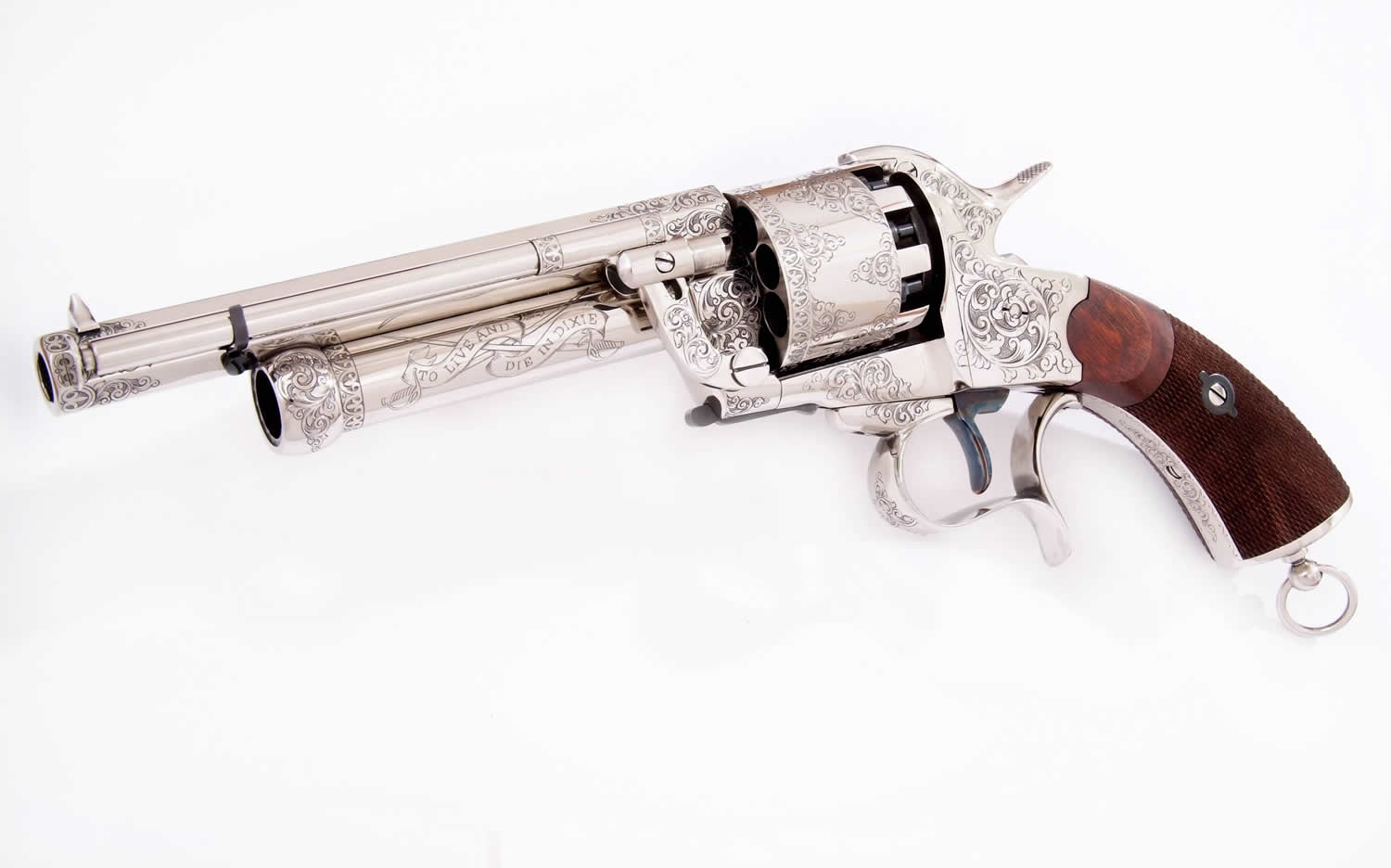
Rule 5: The LeMat revolver

AF-Colt-.25-reverse-side (1)

Beautiful $3,295 working reproduction of the Confederate black-powder favorite LeMat revolver. Originals were hand-made in New Orleans. Part revolver, part shotgun, all sex.

“It was the only percussion revolver of the mid-19th century that rivaled the 1847 Walker Colt for sheer audacity of size and power. A unique looking firearm, the LeMat had a movable hammer that offered the option of firing a massive 9-shot .42 caliber cylinder from the top barrel and a second, lower shotgun barrel chambered for a grapeshot paper cartridge – the coup de grace.”

It was carried by, among others, Rebel cavalryman J.E.B. Stuart and also one of the Rebel officers in my novel Knoxville 1863. Click the pix to biggerize it for better detail.

Via America Remembers.

And more random thoughts

How different from the criminal AG Eric Holder could this Loretta Lynch (I almost wrote Lynn) person be? This “first black woman AG” (whoop-dee-do) has been on Holder’s Advisory Committee since 2010 and its chairman since 2013. Why else was she nominated and what else is she gonna do but play scandal goalie until Wormtongue retires?

After paying social security taxes for forty-six years, I’m taking my pittance of the bennies every month without any sense of guilt. I financed the retirement of the so-called “greatest generation,” and now it’s the whatever-you-call-the-latest-generation’s turn to pay for mine. The pols can fix this thing on somebody else’s back. I didn’t escape it and I see no reason why these young-uns should.

Officer Friendly certainly seems to be out of control. But it’s more likely his boss, the politician, who wants it this way. The politicos could stop all these police shootings immediately if they wanted to.

College women must be raping each other, considering there’s more of them in college than men every year.

The D.C. incompetents have been pushing this lo- or no-fat nonsense since the 1960s and pimping for pasta, potatoes and bread. In the 90s they even recommended we all eat more sugar. Of course they take no responsibility for the resulting epidemics of diabetes and obesity. Taking the blame is not their game. Instead, we always got the NYTimes quoting them that the science was settled.

I thought the proactive girl-gropers of Mexico City’s subways were bad until India’s gang rapes started blossoming. Time for the wymyn to admit how good they have it here.

FTL (faster-than-light) is fantasy. I’d settle for a working ramscoop or interplanetary beam rider and reliable cold sleep. Or a generation starship. So long as we go into the outer reaches of the solar system and, eventually, the stars.

Fart, Barf & Itch was corrupted long ago where their cross-dressing director was dressing in panties and bra. The Democrats have just upped the ante.

Prior to the Civil War, American pols routinely attacked each other in scurrilous fashion, just like they do today. Like the white-supremicist candidate whose opponents had three black children run at him in mid-sentence on the stump yelling “Father, Father!”

Wendy is such a hoot. And to think she started off being just another boring liberal trying to get elected to statewide office in libertarian Texas. Nobody expected her to become real entertainment. I hope the Dems pay her to run again and again and again. I’d even chip in a few dimes for the pleasure.

Nimrod Newton Nash

Newton Nash

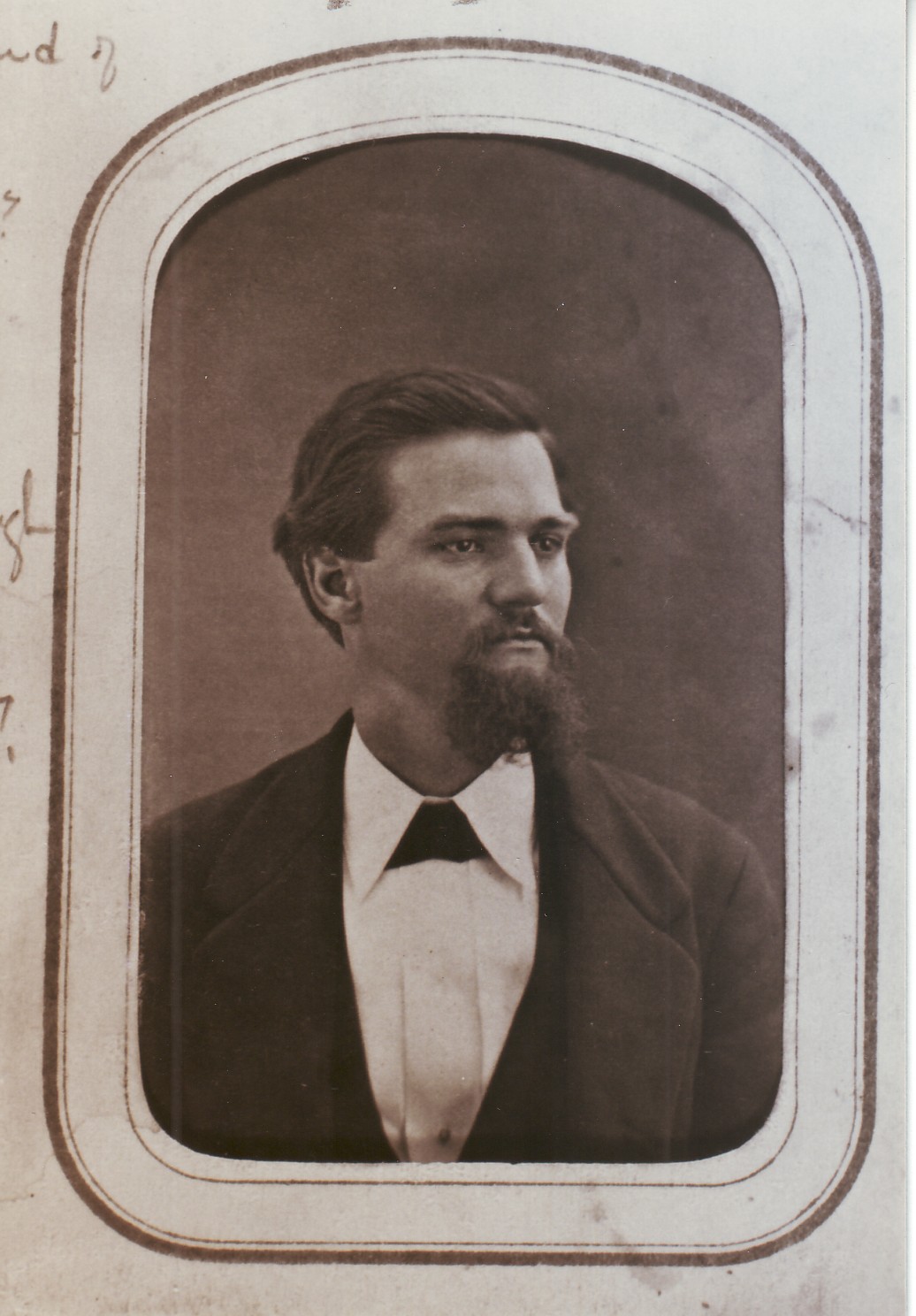
Newt Nash was a rifleman in the Thirteenth Mississippi Volunteer Infantry Regiment whose letters home to his wife Mollie go a long way to illuminating the Civil War from the Confederate viewpoint. Most of them are in my latest nonfiction book a history of the regiment in paper and digital at Amazon.

Copies of the letters, transcribed by Newt’s descendants, were given to me by Weldon Nash of Dallas, an old Aggie who faithfully reads from some of them every year on July 2, the Battle of Gettysburg’s famous second day, the day Newt was killed in the regiment’s charge on the Union lines. Weldon also sent me this copy of Newt’s photograph, apparently taken in the late 1850s.

I’m sure Weldon will be pleased to see Newt finally out here on the Net which I hope will stimulate interest in his eloquent letters, most of them quoted verbatim in my history of the regiment—-cheap at 99 cents in digital format.

When Old Ironsides shelled Da Nang

usscon

It was in the spring of 1845, according to the USS Constitution Museum, at the Charlestown Navy Yard in Massachusetts, where Old Ironsides is docked nearby, still afloat after more than 200 years.

Captain John “Mad Jack” Percival was then in charge of the pride of the American Revolution’s world cruise and he ordered the shelling that redistributed some of the tile on the roofs of old Da Nang. Back then the French had dubbed it Tourane—or soup bowl—for the shape of its harbor on the South China Sea.

Percival was acting on behalf of what he thought were some unfairly detained French missionaries, though the Vietnamese emperor Thiệu Trị considered them disruptive. I alluded to the incident in my Vietnam war novel The Butterfly Rose, which focuses not only on our war there but the 19th century French invasion as well.

I didn’t give much space to the shelling, apparently done by the ship’s starboard Paixhans guns, the first naval guns designed to fire explosive shells, being preoccupied by my fictional French Foreign Legion assault on Hoi An a few miles south and almost 20 years in the future, during the American civil war.

So it’s good to see the museum website’s offering of the story and you should give it a read to appreciate just how long ago American involvement in that part of the world began—almost a hundred years older than the accepted 1950s version of most contemporary histories.

Our post WWII role as world policeman, it seems, is much older than we think.

Yankee hypocrisy: The lies New York publishers tell

I’ve been wondering what to do for a post on this Sesquicentennial year (1863) of the American Civil War. I finally decided that this 3-year-old review on “The Wanderer: The Last American Slave Ship and the Conspiracy that Set its Sails” suits the case with a little editing.

“The title is a phony, as the author makes clear deep in his text. The truth seems to have been too much for his New York publisher to bear. That is the author’s unveiling of the little known business offices of slave traders in New York City and their slave ships down at the wharves of Lower Manhattan. They were the real “last American slave ship(s).”

Author Erik Calonius shows how, until 1864, the third year of the war, these Yankee slave dealers gathered their capital from Northern businessmen and sent their ships to West Africa to buy African slaves low and then sell them high in Cuba and the Caribbean. Then they hosed down their Middle Passage decks and steamed home to New York City.

“All under the disinterested eyes of corrupt port officialdom (despite federal law then making American slave-trading a crime punishable by death). The book’s focus on the Southern sloop Wanderer and the few hot-heads who took it to the mouth of the Congo River for slaves and then back to Georgia once in 1859 ignores the New York slavers which operated for another five years.

“Calonius smartly weaves the Wanderer tale in with the 1850s politics of North and South and other events, such as the John Brown raid, that precipitated the American Civil War. The tracing of the successful descendants of one Wanderer slave was a nice touch. Would have been much better, though, to have included a few of the unwilling passengers of the more numerous New York slave ships.

“I suppose we should be pleased that the publishers didn’t snip the real story out of the book entirely.”