Category Archives: Library

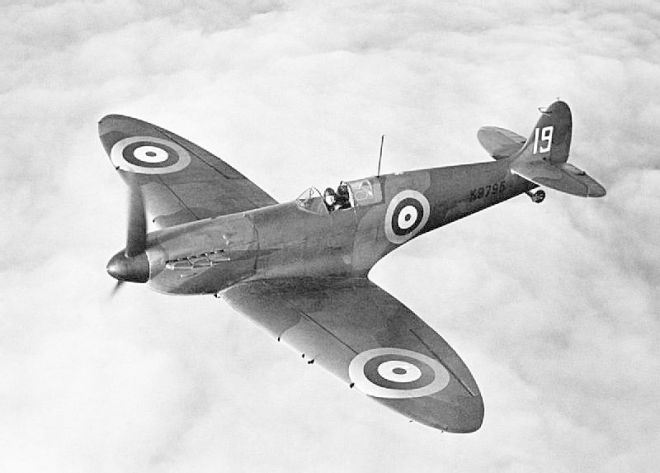
Supermarine Spitfire 1938

Been rereading Brit author Alexander Fullerton’s World War II convoy novels in which German submarines sank more than actually got through. And if the subs didn’t get them, the Stuka dive bombers did.

The most reliable aerial weapon the Brits had to protect the convoys was the Supermarine version of the Spitfire, with its four-blade prop. Always have liked the look of those wide wings. They mounted eight machine guns. They needed so many against malfunctions, such as the freezing of the outer ones at high altitude.

Reprise: Obsolescence

This is from 2007, back when the Scribbler was just a year old.

“The Seablogger, writing about his first PC, a desktop model, in 1986, reminded me of my first one, a bulky, more or less portable, Kaypro II, in 1983. Like the Seablogger, I bought the computer to write on, enchanted by the habit, acquired at my newspaper job, of writing on a screen instead of typing on paper. The main advantage, of course, was being able to quickly and simply backspace through the stuff I decided I didn’t want. No more carbon paper or Whiteout. There were other keyings for “erasing,” of course, but backspacing was my initial favorite. It took weeks to learn all the commands, but it was worth it, even as the commands have changed over the years. I still have some printouts from those days, a short story or two, and the start of a diary.

“The Kaypro’s builder, Non-Linear Systems, was the world’s 5th largest personal computer maker in 1983 when it changed its name to Kaypro Corp. Seven years later it was bankrupt. Shortly before that, the green-on-black screen died. Couldn’t get it fixed. So one night, after buying one of the first laptops, made by Radio Shack, I deposited the bulky Kaypro in a dumpster. I should have kept it. Might be worth something today. But it was the start, and I’ve never looked back–except to marvel that I ever wrote on a typewriter.”

Rebuild the Temple? Lord I hope not

British historian Paul Johnson’s 2009 book A History of The Jews is as good as advertised by Roger L. Simon who called it “a fantastic book I had promised myself [to read] for years.”

I’ve read so many histories of the Jews that I wondered if I could possibly learn anything new. Well, I have and I’m only up to Herod The Great. But the bit on Herod led me to something I’ve pondered ever since the first time I visited the Kotel, or Western Wall of the Temple Mount, in Jerusalem. And I think Johnson has given me the answer: Please Lord, don’t ever let them rebuild the Temple.

And not because it would outrage the goat lovers. What doesn’t? No, the worst possible consequence would be the return of the animal sacrifices. Here’s Johnson, using multiple sources to convey what it was like 2,000-plus years ago:

“The sacrifice rituals struck visitors as exotic, even barbarous, for most strangers came at feast times when the quantities of sacrifices were enormous. At such times the inner Temple was an awesome place—the screams and bellows of terrified cattle, blending with ritual cries and chants and tremendous blasts of horn and trumpet, and blood everywhere.

“The author of the Letter of Aristeas, an Alexandrine Jew who attended as a pilgrim, says he saw 700 priests performing the sacrifices, working in silence but handling the heavy carcasses with professional skill and putting them on exactly the right part of the altar.

“Because of the huge number of animals, the slaughter, bloodying and carving up of the carcasses had to be done quickly; and to get rid of the copious quantities of blood, the platform was not solid but hollow, a gigantic cleansing system.”

It’s nice to learn they could collect and wash away all that blood “in the twinkling of an eye,” as Aristeas put it with a phrase that shows how really old some cliches can be. But it sounds ghastly. If Israel is unfairly battered by the UN now, and it certainly is, just imagine what condemnations resuming animal sacrifices would bring. In addition to the godawful mess and the smell.

Not to worry. It will never happen. Rabbinic and synagogue Judaism long ago replaced animal sacrifice (with the Roman destruction of the Second Temple in 70 C.E.) and that’s a very, very good thing.

In phony looting news…

The cBS headline: “Small Amount of Looting at Texas Blast Site,” follows a script ably dissected by social comentator Rebecca Solnit on how authorities promote division among residents of a disaster area to enhance their power at the expense of community feeling and cooperation. DRUDGE cooperates by enhancing the tale with the headline: “Looters Raid Homes.”

The original cBS story depends on the nebulous quote of one police sergeant who can’t get specific because he apparently has nothing to be specific about. Ah, but the coppers have things well in hand. “Very secure” now they say, keeping even homeowners away from their damaged homes.

Which, of course, also is going on in Watertown, Mass, where postal worker Michael Demirdjian has been barred from his home, which contradicts the WaPo’s headline that residents have been told to stay home behind locked doors. This supposedly to aid the search for one bombing suspect, though I suspect “the authorities” there are simply reveling in their ability to order people around—shutting down schools, businesses and whole neighborhoods.

Looks pretty hysterical from afar. And counterproductive since, as Solnit makes plain with historical evidence, it turns people who might have helped in the search into passive sheep either isolated from one another or herded from one place to the next by armed and strutting bureaucrats who are absolute strangers to the area and in the best of circumstances couldn’t find their posteriors with both hands.

UPDATE:  Forget TSA’s airport excesses, the bureaucrats have turned Boston into a “Prison City.”

MORE:  Life in the Police State “…as convoys of heavily armed officers and troops arrived by the hour.” You couldn’t pay me to live in Massachusetts.

Dreadnoughts

Actually, it’s the U.S. battlewagons of 1945, entering Lingayen Gulf in the Phillipines. You can tell the war by that bedsprings thingie perched atop the mast of the battleship in the foreground—an early iteration of radar. Notice the guns trained up. By 1945, Japanese fighter-bombers were their deadliest foe. Apropos of nothing, though it’s too bad they were scrapped. They could help sober the latest North Korean bombast. Click on pix to biggerize.

A Soldier of The Great War

What a brilliant book, this epic of Italy in the first world war, with touches of the later rise of fascism and the contemptible Mussolini. It’s a dense story with much complexity about music, culture and love, in addition to the expected combat sequences. A few of the longer sentences are a bit hard to follow, but it’s worth rereading them to get the whole sense the author intended.

Implausible some of the plot turns may be, as some Amazon reviewers have complained, but this is fiction, after all, with all its special license. I particularly liked the soldier of the title, Alessandro’s, transition from atheist to believer, especially because it develops out of combat (rather than war’s usual, stereotypical, forced conversion from belief to atheism) though he continues to reject religious dogma.

He’s such an honorable guy, this almost-professor of aesthetics turned conscript, who gives as much (or more) than he takes, that it’s a joy to follow him through the intricacies of Mr. Helprin’s considerable tale. I learned more about Italy than I ever knew.

The author’s style is classic. He writes relentlessly with verbs and nouns, seldom adjectives, and should be taught for his craft alone, if he isn’t already, though he may not be politically correct enough to suit the predominantly-leftist literary academy.

Too many of his books aren’t ready for the Kindle yet, however, and I hope that changes soon. He seems to be a writer who’s made for paper but I prefer digital’s easier distribution and storage, not to mention cheaper price.

Today I am actually 69

I’ve been telling people all year I was 69. Now I will start telling them I’m 70.

Why, you may well ask. Beats me. I’ve done it this way all my adult life. Maybe I’m just an inveterate liar. If so, it comes with the territory.

Or maybe it’s supposed to be predictive. A superstition. As in if I say I’m a year older, then I’ll get to be a year older. Or something like that.

“Oh what a tangled web we weave, when first we practice to deceive!”