Category Archives: Science/Engineering

Viet Nam in space

American-born Aliette de Bodard is half-French, half-Vietnamese and all writer. Her splendid On A Red Station, Drifting takes traditional Vietnamese ancestor-worship to a new high in a far-future, new-old, Dai Viet empire.

De Bodard’s writing, like the brocaded subject itself can be a little stilted at times, but when the characters live with docking star ships, brain implants, and artificial intelligence on a space station orbiting a red sun, their adventures are never boring.

If you like space opera and have any sort of acquaintance with Vietnamese language, cusine and culture, you shouldn’t miss this unique story. And it’s a good introduction to a young writer who, so far, has one other good offering about this 23-planet imperial dynasty and, hopefully, many more on the way.

The ice jets of Enceladus

enceladus12_cassini Ice jets venting on Saturn’s moon Enceladus, captured by the Cassini robot in 2009. The giant plumes of ice (water turned to ice as it vents into the frigid vaccuum) are now thought to be indicative of a giant ocean miles beneath the moon’s ice crust. (Click to biggerize the photo.)

At an average distance of 93 million miles from Earth, shoot, you could make Enceladus (a giant in Greek myth) a weekender. Some day. Maybe. When the solar system becomes our playground.

Thar she blows!

The dystopian outlook that seems to dominate science fiction these days, particularly the apocalyptic kind, foresees an eruption of the dormant but volatile Yellowstone volcano in Wyoming as civilization shattering, especially in North America.

So does the U.S. Geologic Survey: “If another large caldera-forming eruption were to occur at Yellowstone, its effects would be worldwide. Thick ash deposits would bury vast areas of the United States, and injection of huge volumes of volcanic gases into the atmosphere could drastically affect global climate.”

Comes contrarian meteorologist Joe Bastardi at WeatherBell to say that such an eruption would likely, counter-intuitively, be a ho-hummer in most places downwind.

“Remember Mt. St. Helens. There was very little notable disruption to the climate from that. Great sunsets yes and of course the utter devastation around it, but the volcanoes that are of prime concern are in the tropics, and in the Arctic. Volcanoes in the westerlies have their ash distributed quickly, and so I don’t think this would have any real affect on the climate, or put it this way, it would be in the category of Mt St Helen[s] which was minimal…”

Lots of apocalyptic scifi authors who, along with their readers, seem to delight in imagining human misery, are going to look awfully foolish if the thing does blow and Joe is right. And things just might get a little crazy if he isn’t. But I’ll place my bets with him.

UPDATE:  OTOH, as Bastardi’s colleague Joe D’Aleo notes, Jellystone has the potential to be 2,000 times the size of the Mt. St. Helens eruption.

Leaving XP

So what do you think? Are we making ourselves vulnerable to criminal hacking by continuing to rely on the Windows XP OS after April 8? That’s when Microsoft stops supporting XP with, among other things, security updates.

Would it be better to upgrade the software or buy a new machine? A laptop, tablet or a desktop?  Windows 7 or 8? I really don’t want to think about these confusing issues, but it may almost be too late not to. Help me decide, okay?

UPDATE:  Now they tell us. Dammit. But, no thanks, it’s not worth living in Holland or Britain just to avoid learning a new OS.

“We don’t understand climate”

It’s so refreshing to find a scientist who is willing to speak the truth, in the face of his nattering peers. Particularly a physicist, the hardest of all the hard sciences, and, of course, it would be Freeman Dyson:

“Generally speaking, I’m much more of a conformist, but it happens I have strong views about climate because I think the majority is badly wrong, and you have to make sure if the majority is saying something that they’re not talking nonsense.”

Via Instapundit.

Mystery planes over Amarillo

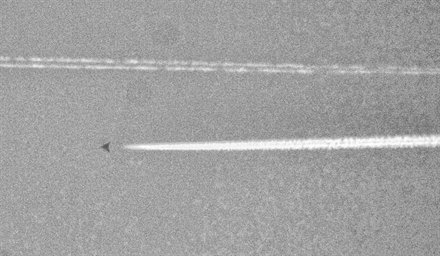
ca8a5909-6257-43bb-8445-f7023cf504a4.Large

A not-so-subtle howdy-do to President Vladimir Vladimirovich?

Texas military aircraft watchers Steve Douglass and Dean Muskett caught three wedge-shaped mystery birds high over Amarillo’s Rick Husband International Airport earlier this month. They ruled out B-2s for lack of the W-shape of their trailing edges. But if they’re black projects why fly them in daylight? Douglass opines:

“A weapons system isn’t a threat to an enemy unless they know it exists. Ask yourself an important question – what’s going on in the world right now?

“Who (…of late) has decided to roll back the clock to the good old days of the Cold War and MAD?

Question: How do you make your adversary take a moment of pause and rethink his military doctrine based on Cold War technology?

Answer: You give him a glimpse, a hint that we haven’t just been sitting on our hands all these years after the fall of the Soviet Union.”

Adds Aviation Week’s Ares Blog: “It’s not merely logical to expect that numerous classified aircraft programs exist: it’s almost a necessity under the principle of Occam’s Razor, because if they don’t, you have to contrive some sort of explanation for what Area 51 has been up to all these years.”

Via FoxNews.

The carbon dioxide shuck

Almost every global environmental scare of the past half century proved exaggerated including the population ‘bomb,’ pesticides, acid rain, the ozone hole, falling sperm counts, genetically engineered crops and killer bees. In every case, institutional scientists gained a lot of funding from the scare and then quietly converged on the view that the problem was much more moderate than the extreme voices had argued. Global warming is no different.”

—Matt Ridley, author of The Rational Optimist and member of the British House of Lords.

Meanwhile, Wormtongue, the shuck’s most prominent proponent, is siccing his cronies on “deniers.”

UPDATE:  And the Dictator’s Club’s favored alarmists are getting shriller than ever.