Category Archives: Genealogy

Our black or Jewish ancestor

I’ve told Mr. B. that he can legitimately claim an African-American ancestor. It would work as an Affirmative Action gambit these days if that should ever be needed. IF, that is, we buy into (or pretend to) the widespread claim that South Carolina planter/slave owner Gideon Gibson was a mulatto.

He was, indisputably as far as my family is concerned, our six greats uncle because we descend from his sister Hannah Gibson and her daughter Marcia Saunders Murphee.

Marcia (nicknamed Massey) married Claudius Pegues III Jr., a disabled Revolutionary War veteran and my four greats grandfather whom my late mother (and subsequently one of her granddaughters) used to establish membership in the Daughters of the American Revolution.

Although if mother knew anything about Hannah and Gideon Gibson she never spoke of them to me. Neither the African nor a possible Jewish connection would have appealed to her, to put it politely.

I prefer the claim that these Gibsons (sometimes spelled Gupson) were, in fact, Sephardic Jews, possibly originally from Portugal. Not that such exalted sources as PBS and Tulane University would necessarily agree. Indeed, large numbers of African Americans claim descent from Gideon and we know what openly daring to disagree with black people will get you nowadays.

But genealogy is very far from an exact science, and other than establishing a link to a person, old (and frequently misspelled) public and private records are at best ambiguous—we have no idea, for instance, whether Gideon called himself a mulatto, or whether some officious British colonial clerk decided he was one based on his skin color, hair texture and/or facial features.

We do know that Gideon carried documents proving he was a free man, because he showed them to the then governor of South Carolina (1740s), which was duly recorded, but the documents could as easily have been his release from indentured servitude—rather common in his time—as any manumission from slavery.

So we are pretty much left to believe what we like. And what I like is the idea that Gideon and Hannah Gibson were not half or less Africans at all but Melungeon Jews, Sephardics in flight (and often in secret) from the Catholic Inquisition which had driven their ancestors from Spain and Portugal.

Although I’m sure the African claim would make a much better Affirmative Action gambit than the Jewish one.

Big Boy

One of Mrs. Charm’s uncles, who lives in a corner of northwestern Virginia, photographed this Bald Eagle near a creek behind his home, the first example of the national symbol he’d ever seen there.

UPDATE:  Meanwhile, the useless Green wind turbines (which don’t earn a dime without government subsidies and still fall apart from lack of maintenance) are death traps for these magnificent birds.

The Black Confederate Soldier Fantasy

I have heretofore avoided joining in the liberal pile-on upon the Sons of Confederate Veterans (of which I am an inactive member) and the League of The South for their promotion of the ridiculous idea that thousands of slaves were carrying the rifled muskets of the Confederacy to fight for the freedom of their masters and mistresses.

I know where the idea comes from, i.e. the few servant/slaves who followed young Marster to the Rebel army and occasionally fired a musket at the enemy either to protect young Marster or just for the hell of it in the general excitement of battle.  And I can imagine why it’s being pushed nowadays: because it has become fashionable among so-called historians to insist that the Rebels were “fighting for slavery,” primarily because Confederate politicians and some generals said (and wrote) that they were doing so.

But I’m finally joining the pile-on now that there is an elementary school textbook, no less, being issued to Virginia fourth graders that claims: “Thousands of Southern blacks fought in Confederate ranks, including two black battalions under the command of Stonewall Jackson.”

Continue reading

Here’s a thought

“In Victorian America, death was discussed open and honestly, but the topic of sex was considered taboo.  In the United States today, it is just the opposite.” –from Widow’s Weeds and Weeping Veils.

Via TOCWOC.

Civil War Sesquicentennial

“For every Southern boy fourteen years old, not once but whenever he wants it, there is the instant when it’s still not yet two o’clock on that July afternoon in 1863, the brigades are in position behind the rail fence, the guns are laid and ready in the woods and the furled flags are already loosened to break out and Pickett himself with his long oiled ringlets and his hat in one hand probably and his sword in the other looking up the hill waiting for Longstreet to give the word and it’s all in the balance, it hasn’t happened yet, it hasn’t even begun yet….” William Faulkner, Intruder In The Dust.

The Sesquicentennial isn’t until next year, but some have already started fretting about it. And not very accurately, either.

Via Instapundit.

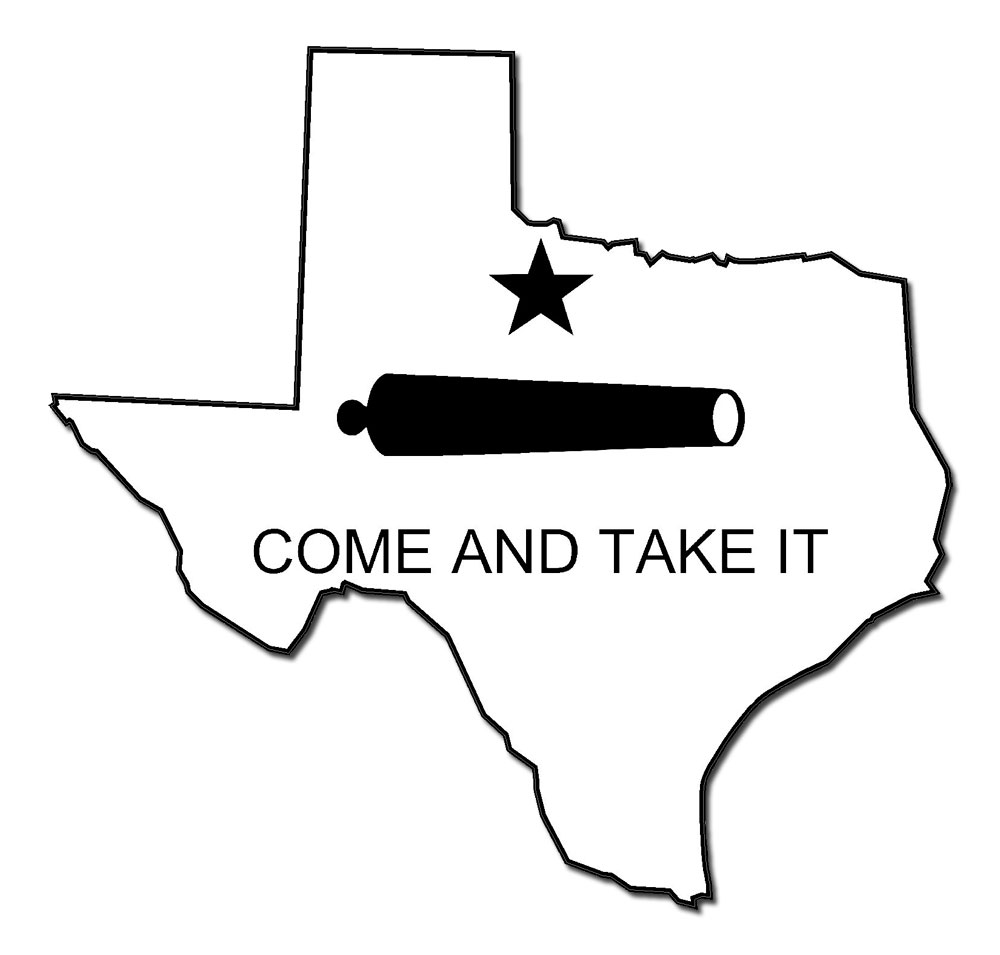
Happy Texas Independence Day

It’s happy now. Wasn’t on this day in 1836. The Alamo was under siege by the Mexican thousands and the Texians, despite today’s issuance of their proclamation of Texas independence, were about as disorganized and fractious as you might expect a fledgling government and its ad hoc military to be.

Four days from now, with the fall of the Alamo, and not long afterward with the horrific massacre at Goliad, the prospect of hanging would fix all their minds remarkably on their country-making goals. The victory at San Jacinto would follow and Texas would be a newly independent Republic.

What time do they serve the jello?

Getting old means time speeds up. The days fly by, the weeks rush past, pretty soon the season you were just getting used to is being replaced by another one.  And before you know it, you’re another year older and deeper in debt. Wait. That was a song lyric. I think. What is this phenom, which isn’t relegated to the nursing home but seems to affect all oldsters? Well, there are theories.