Category Archives: Library

Treasure Island

Mr. Stevenson’s Treasure Island is still one of my favorites, though the last time I read it was to Mr. B. just before he learned to read. I often think of young Jim Hawkins, Long John Silver and old Ben Gunn and his secret in the cave.

And Blind Pew and the fabled black spot.

And, of course, the book is at least 300 percent better than the movies, even the 1934 classic with Wallace Beery. Or the 1990 remake with Charlton Heston.

As reviewer Robert Guttman says at Amazon (where the ebook version linked above is free!): “No boy [or girl] ever really outgrows Treasure Island.”

Via Miriam’s Ideas.

UPDATE:  I used the link to get a free copy and I’m rereading it!

The birth of the ballpoint

“The greatest interest in the ballpoint pen came from American flyers who had been to Argentina during World War II. Apparently it was ideal for pilots because it would work well at high altitudes and, unlike fountain pens, did not have to be refilled frequently.”

Argentina? That’s where the Jewish-Hungarian Ladislas Biro and his brother, Georg fled World War II and set up a factory in 1943 to manufacture their ballpoint invention. They were still developing it in 1944 when they ran out of money. The Eberhard Faber Company paid them $500,000 for the rights to manufacture it in the U. S. But it still needed work.

Finally, in 1945, Gimbels sold 10,000 aluminum ballpoint pens in one day at $12.50 each. Today, of course, they’re made of plastic and so cheap that businesses give them away for advertising.

Via IdeaFinder & Ian McEwen’s novel The Innocent where I saw the flyer connection mentioned and got curious. Which you can do with the Internet.

The Nazis were Socialists

That the Nazis were Socialists, that fascism in Germany was Socialist in nature is much more widely understood today than when I was young in the 1950s and perusing the latest New York publisher’s Nazi-centric history of World War II.

In their telling fascism was some sort of weird right-wing, racist cult unto itself with no connection to the Soviet Socialist tyranny. It was the time of the Cold War and the Soviets were too powerful to be treated insensitively (like the violent Muslims today) in addition to the fact that Leftists controlled the publishing industry and had an interest in protecting Socialism’s reputation.

Today, thanks to Google in particular and the Internet in general the connection between the Nazis and the Soviets is much more obvious, in things like their sharing of Poland in 1939. Study the old, once rarely-seen photos of the Nazi and Soviet officers smiling and shaking hands as they prepare to murder the Poles and confiscate their property.

New histories like Timothy Snyder’s Bloodlands likewise underscore the Nazi-Soviet cooperation in the Holocaust. His figures, from the formerly-secret Soviet archives and elsewhere, show the almost six million Jews were among a total of 16 million people murdered by Europe’s two most powerful Socialist regimes.

Leftists can continue to deny the Socialist connections to this appalling genocide all they please. They have always been great deniers of the obvious. But their grip on the public’s understanding of history is loosening steadily. Mercifully.

Via Instapundit.

The Avengers: A Jewish War Story

This is a terrific story of little-known but not soon forgotten Jewish avengers of the Holocaust. Not the comic book super heroes, who debuted in 1963, but the Jewish guerrilla versions incarnated during World War II. Against all odds they fought their oppressors, derailed Nazi troop and supply trains, and for their final act succeeded in surreptitiously poisoning thousands of Nazi POWs in American care.

Chief Avenger Abba Kovner may not have thought of himself as the reincarnation of Judah Maccabee but he unsettled enough Nazis in occupied Lithuania and captured ones in post-war Germany itself to win a similar reputation. Then he moved on to an Israeli kibbutz, fought in Israel’s 1948 war for independence and finally became a leading Israeli poet and author.

Kovner and his co-guerrilla couriers and lovers Ruzka and Vitka are already known in Israel. One hopes this amazing story of these heroes of the Holocaust will take them and their deeds to a wider audience. They certainly deserve it and author Rich Cohen has done a masterful job for them in a fascinating footnote to a genocide that must never be forgotten.

Very funny send-up of global warming

Ian McEwan’s novel Solar is a very funny send-up of the global warming cult in particular and government-dependent scientific research in general. Many Amazon reviewers seem to want to distance themselves from the main character, opportunist-physicist Michael Beard who, as he himself says, has enjoyed a free ride ever since he won a Nobel prize.

He is a cad, certainly, but a very amiable and human one and most of his wives and lovers share his selfish weaknesses—even his mother whose deathbed confession of 17 affairs in five years wins his (and our) admiration.

If anyone is in need of sympathy, it’s his four-year-old daughter, the only innocent in the tale. But she shares his hearty approach to life and one suspects she will turn out all right, enriched by memory of her father, the Expanding Universe, as her mother calls him in his final 65-pounds-overweight incarnation. I enjoyed the author’s novels Atonement and Enduring Love. But neither prepared me for this hilarious hoot whose only real sadness is saved for the final page. Thank you, Mr. McEwan.

Station Eleven

I don’t usually read dystopian fiction. I can see the appeal and understand why it’s popular, but I don’t need the depressive (and usually far too cynical) view of humanity-under-siege.

Emily St. John Mandel’s dystopian novel “Station Eleven,” is different. Not only because of her beautiful writing and character development, but because despite the collapse-of-civilization theme, her view of people (the bad as well as the good) and her overall story actually are hopeful.

For the survivors, that is. The few left after a believable, airborne pandemic (no, it’s not ebola) kills most of the world’s population in a matter of weeks. Which takes down the electric and transportation grids, the Internet and smart phones, along with just about everything else. Very thought-provoking.

The novel ends with a vision of ships at sea. I prefer to think of one of the story’s main characters, the Traveling Symphony moving on, ever in search of audiences, rosin and bow hair. (Not to mention new strings.)

I also liked Mandel’s first novel, Last Night in Montreal, for similar reasons and her third one The Lola Quartet. though both involve parents who ignore their children. None of it is light-reading, in other words. The tragedy-of-life theme the litterateurs love so much. It’s nevertheless good stuff you should try.

But start with Station Eleven.

Nimrod Newton Nash

Newton Nash

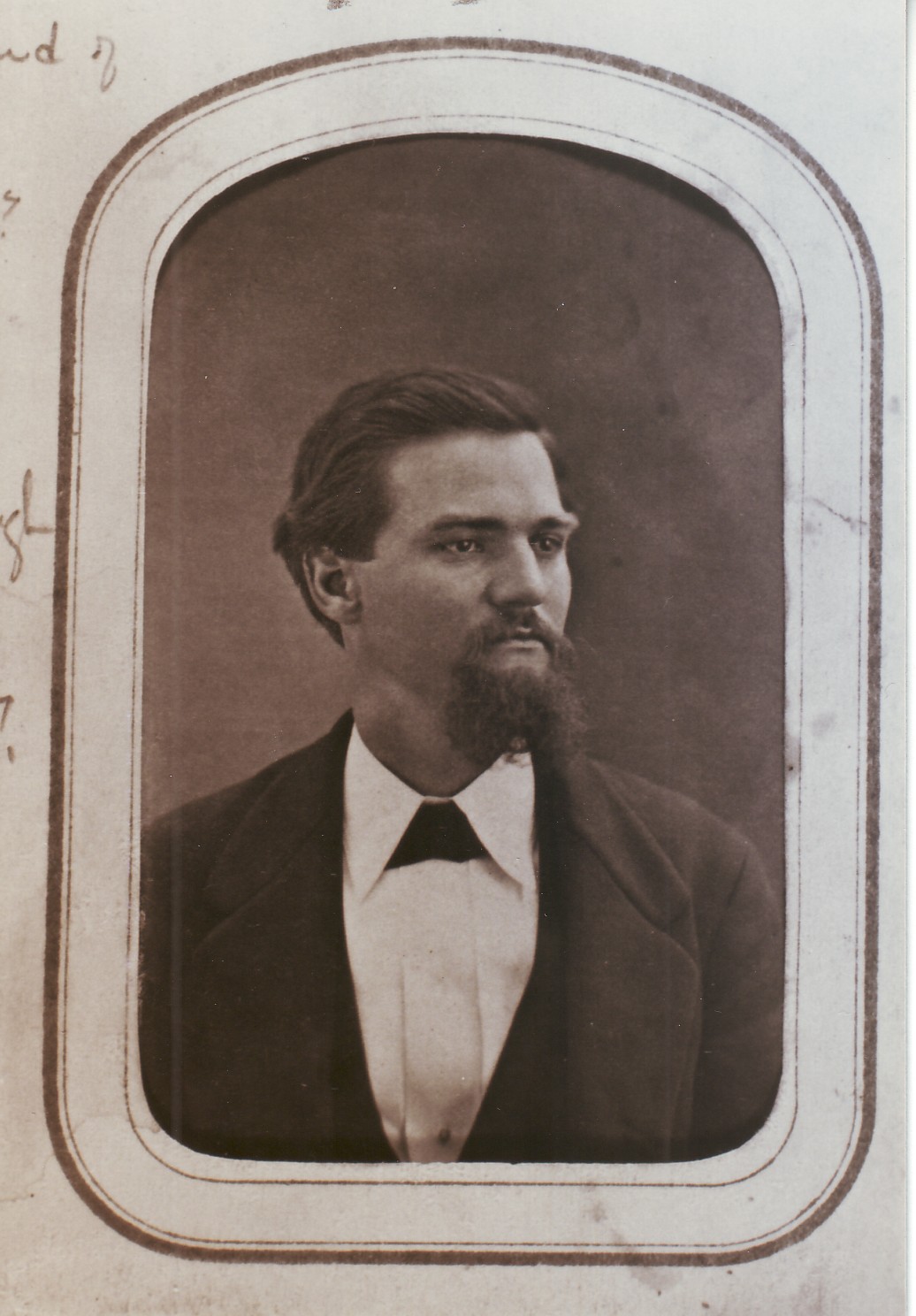
Newt Nash was a rifleman in the Thirteenth Mississippi Volunteer Infantry Regiment whose letters home to his wife Mollie go a long way to illuminating the Civil War from the Confederate viewpoint. Most of them are in my latest nonfiction book a history of the regiment in paper and digital at Amazon.

Copies of the letters, transcribed by Newt’s descendants, were given to me by Weldon Nash of Dallas, an old Aggie who faithfully reads from some of them every year on July 2, the Battle of Gettysburg’s famous second day, the day Newt was killed in the regiment’s charge on the Union lines. Weldon also sent me this copy of Newt’s photograph, apparently taken in the late 1850s.

I’m sure Weldon will be pleased to see Newt finally out here on the Net which I hope will stimulate interest in his eloquent letters, most of them quoted verbatim in my history of the regiment—-cheap at 99 cents in digital format.