Category Archives: Space

Night Train To Rigel

I enjoyed this space opera, from beginning to end and never put it down for long. It’s a fluffy story, sure enough, but the way author Timothy Zahn structured it, I kept reading to find out what the latest twist was all about.

I love the idea of a train to the stars—which is very H.G. Wells but also hangs on a point of theoretical physics—down to the connecting vestibules between the cars which I could easily visualize, coming as I do from a time when American passenger trains were more common than they are today.

Perhaps because I’ve never read any other Zahn adventure, I wasn’t plagued by the comparison some other Amazon reviewers can’t seem to help but make with his other books, which I will now go on to read, starting with the more popular The Icarus Hunt.
Curiosity: A new Mars landing

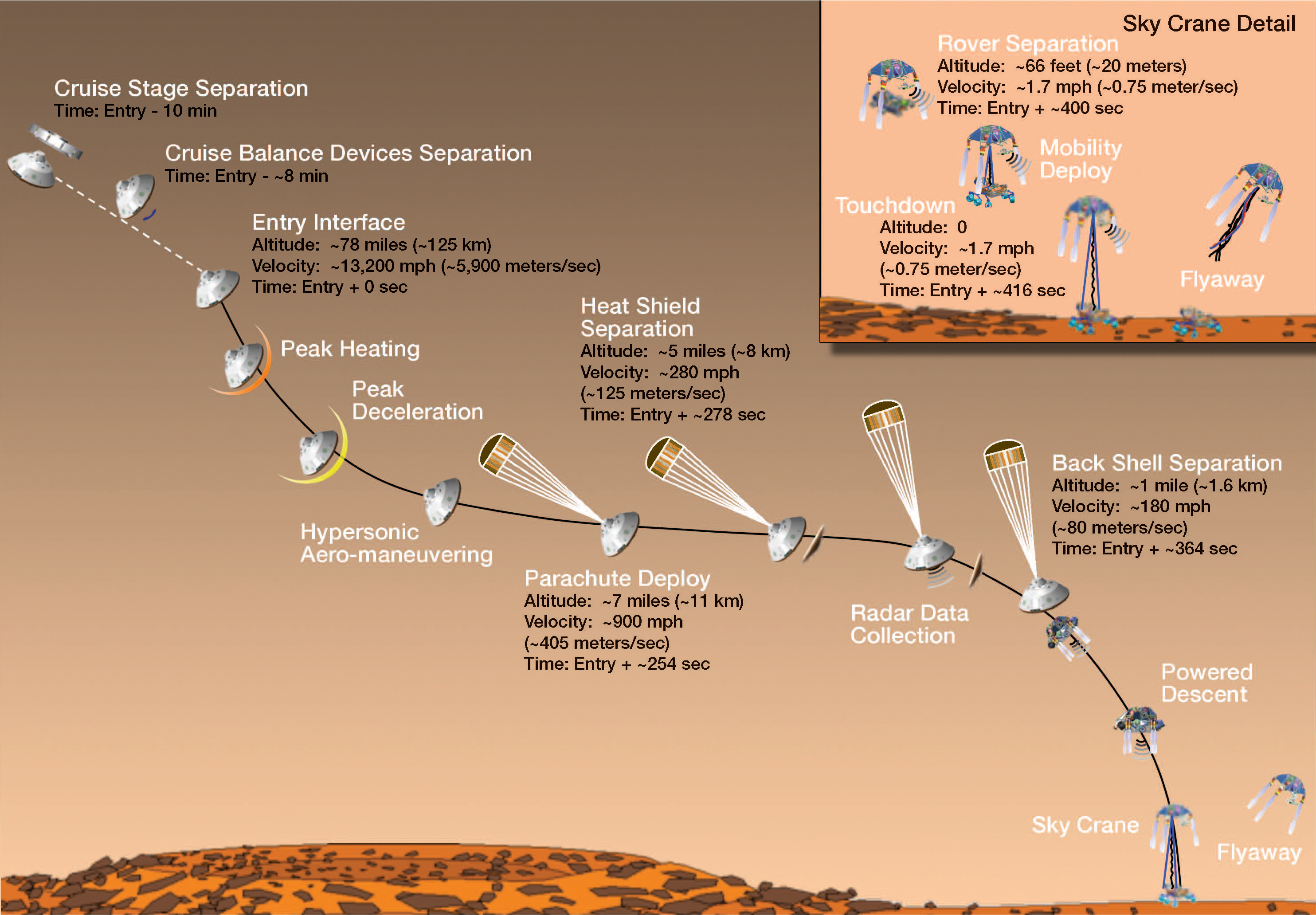
Curiosity is the latest NASA rover to visit the Red Planet. It’s on final approach this week and scheduled to drop in after midnight Saturday Texas time. The JPL folks will be biting their nails during the seven-minute, automatic descent to touchdown (watch the dramatic explanatory video at the link).

(The WordPress dashboard is refusing to let me try to finesse a correction above. So I have to do it obviously. Curiosity is scheduled to drop in after midnight Sunday Texas time. Sorry about the mistake.)

It will be twice that long before the first radio signal confirmation that all is well (or not) returns to California. More here on the Mars Science Laboratory called Curiosity. Click on the pix to enlarge it for reading without a magnifying glass.

One Hollyweirdo with courage

I wouldn’t give ten cents for most Hollyweird goofballs, but the director of Avatar (a singularly stupid movie) is worth that and much more. Instead of blowing his fortune on illegal drugs and cheap political advice, James Cameron makes technological history.

Talk about courage, this guy really has it. His solo rocketing plunge off the coast of Guam, seven miles to the bottom of the Marianna Trench—the deepest “inner space” spot on Earth— sure proved it. Just thinking about his ninety-minute descent in the fetal position makes me sweat.

Return to the moon

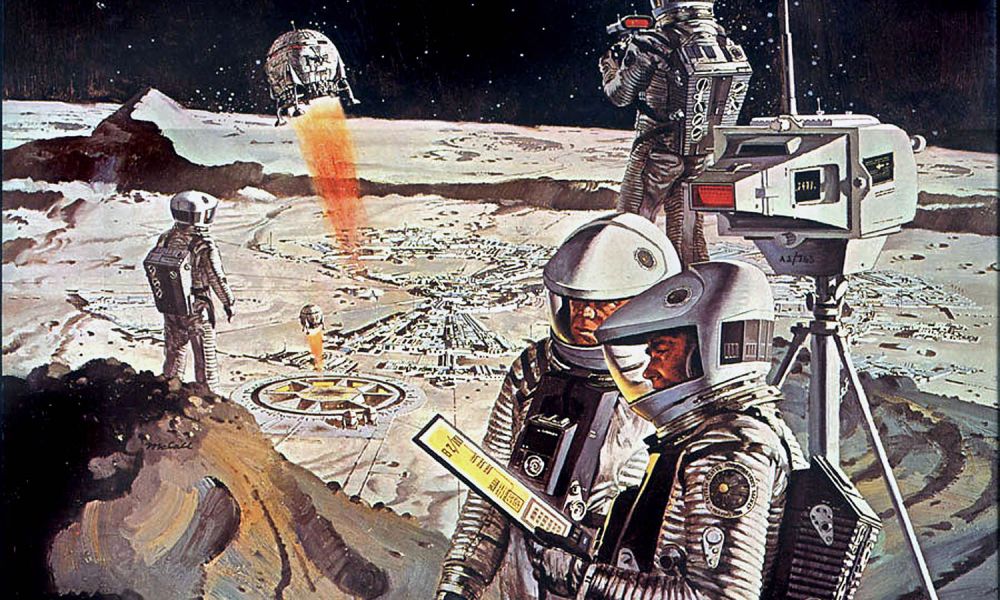
Robert McCall was the dean of American space artists and his painting of a proposed moon base (for the 1960s Kubrick film 2001: A Space Odyssey) still haunts my dreams.

It might have come true but for the wasted billions spent on the stupid Democrat (JFK & LBJ) war in Viet Nam. Now with Uncle Barry focused on enlarging the welfare state, it’s unlikely. Unless private companies find a compelling way to make money at it, perhaps through minerals mining.

Fortunately, there’s still time for it to happen, of course, even if it’s long after I’m gone and it turns out to be made-in-China.

The Kings of Eternity

I’ve yet to read a bad science fiction story by Brit author Eric Brown and Kings of Eternity, a tale of conferred immortality is certainly one of his best. It’s his characters and their inner lives that make the books as interesting as they are, even when the plot is as imaginatively intricate as it is here.

I’d also recommend Starship Summer and Penumbra, which are similar space operas, both about spiritual enlightenment. Brown’s endings tend to be a little bit rushed, but considering the wealth of what has come before them, making too much of that would be churlish.

Those pathetic climate models

Real scientists (as opposed to those corrupted by the federal dole) know the climate is far too complicated for any computer model yet devised to measure what’s happening today, let alone a hundred years in the future.

Like they say, GIGO:  garbage in, garbage out. So this is not a surprise:

“49 former NASA scientists and astronauts sent a letter to NASA Administrator Charles Bolden last week admonishing the agency for [its] role in advocating a high degree of certainty that man-made CO2 is a major cause of climate change while neglecting empirical evidence that calls the theory into question.”

Read. It. All.

Space is a place

I covered the first landing of the space shuttle in 1981. The first space ship. They did real work, hauling satellites to orbit, until the Challenger explosion in 1986. After that, it was busy-work and and increasingly boring. And the disintegration of Columbia over Texas in ’03 showed it was still dangerous.

I remember the shuttle-inspired first flush of private rocketry in the early 80s, the grandiose predictions that never came to pass. Now, with the inevitable retirement of the circa-1969 technology shuttles, the grandiose predictions are back:

“The future of space is in the hands of the guys behind Amazon, PayPal, and Virgin [and Google]. The force of competition will create endless possibilities and unimaginable technologies. No more talking about how the space program brought us Tang and Tempur-Pedic mattresses. We’re going to Mars, baby, in business class.”

Will this sort of thing now come true? Much as I wish it would, I can’t help doubting it. Time will tell.