
Not a live wolf. No more than the bow’s “frog” is a live frog. How could one possibly fit a real wolf inside something with no more depth than a cigar box? No, I mean a wolf tone, so called because it’s supposed to remind you of the animal howling.
Well, not exactly. Not even a crying Israeli jackal, actually. Mine, which occurs on my $500 rental beginner’s violin when I bow a C natural in first position on the A string, is more wispy. Like an intermittent breeze ruffling tree leaves if I were to sustain it past four beats, which I try not to. It’s become a phobia of mine now.
I’d noticed the wispy breeze for months, no matter what corrective I made to bow speed, fingering, shoulder movement, thumb-on-the-frog, etc. So, the other day while trying out some new $500 bows to replace my chunky $30 student fiberglass, which I seem to have outgrown, I asked the shop pro to check it out.
He did, including in a higher position. He said it was a probable wolf, i.e. a sympathetic artificial overtone which could be due to the string or to the spruce-maple combination of the wooden violin itself.
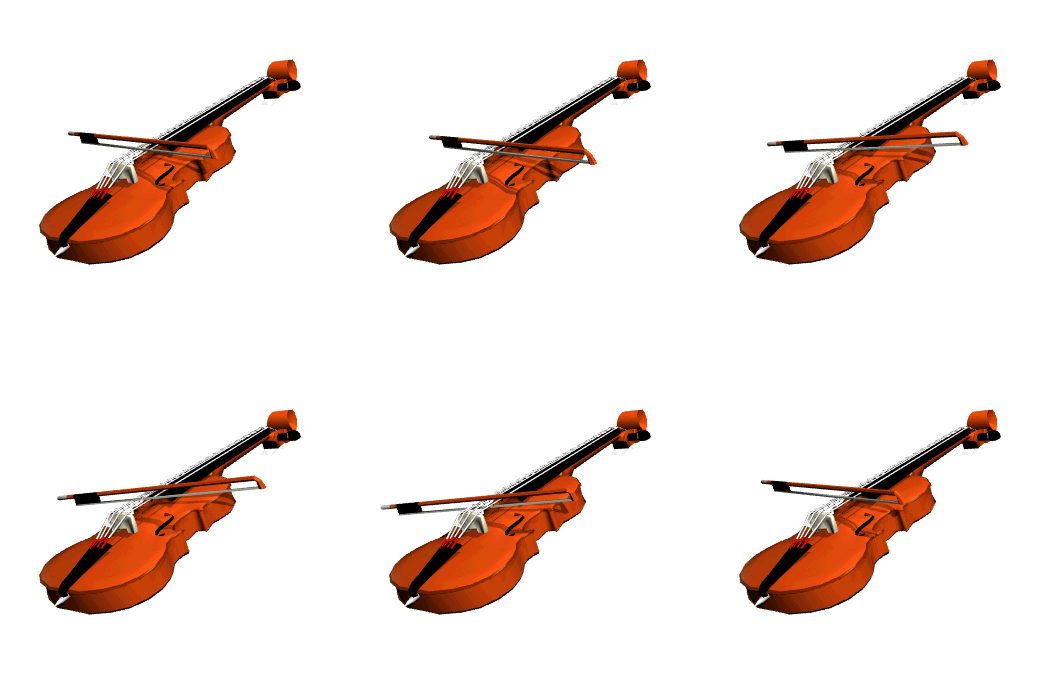
Which cements my previous intention to return this Eastman beginner’s instrument around my one-year beginner’s anniversary in December and buy a new step-up one. I’ll probably get another Eastman, a 405 for around $1,200. And new strings, maybe expensive Dominants. But, first, I’ll be sure to check that C natural. And hope I can say adieu to the wolf. Forever.
UPDATE: Well, now, this fellow says: “On a good violin with the traditional bass bar you tend to have a wolf tone on the B natural or C natural above A 440.” And he adds that’s especially so on the A string. I’m not sure my rental qualifies as “good,” but the wolf is right there.
















 THE TEXAS SCRIBBLER