Tag Archives: World War II

Cavity magnetron

We had a power surge at the rancho the other day, from an electrical transformer on a nearby power pole that inexplicably burst into flames. The upshot was no harm to our computers, but our microwave started arcing when we used it. The GE tech who came to fix it said it would be cheaper to buy another one, but I figured since the fix-it price was about the same, why not forgo the hassle of getting rid of the old one and going out to buy a new one.

So he took it apart to replace the microwave generator, and I saw that it was stamped "magnetron." Which reminded me that it was a descendent of World War II’s great secret: the cavity magnetron. It was a British invention that, with some American tweaking, became radar to help bombers find German and Japanese targets through clouds, track enemy planes and help pilots land safely in snowstorms. Not to mention later being used to track storms and tornadoes for all of us. And now we also use it to heat frozen food and coffee and cook fish, broccoli, potatoes and oatmeal. Pretty amazing.
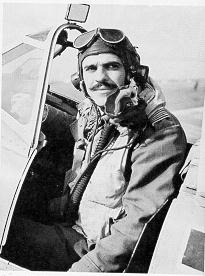
Lance “Wildcat” Wade

Lcwade

Continuing my informal look at Texas fighter aces that began with Mustang pilot Richard Candelaria. Wing Commander Wade is the leading American ace in any foreign air force, in his case, the Royal Air Force of World War II. He was born in 1915 in the East Texas hills around Broadus, on the Texas-Lousiana state line, and was a muleskinner as a youth at Reklaw, near Tyler. He didn’t have enough education for the U.S. Army, so he got a private license and eighty hours of experience and went to Canada to join the RAF. He flew Hurricanes and Spitfires and is credited with twenty-three confirmed solo kills of Axis aircraft. He died in a flying accident in 1944.

The Stringbag

Reading a Fullerton novel over again, this time about the Royal Navy’s travails in the eastern Mediterranean in 1941. At one point a carrier with just ten planes went into action against the Stukas of the Nazis and was humbled. Among its ten warplanes was an old biplane called the Albacore, which was supposed to be the successor to an older one called the Swordfish but nicknamed the Stringbag for the mass of wires holding it together. Oddly, the Albacore was ultimately outshone by the Stringbag–at a time of high-performance monoplanes–because the bag was so slow the Stukas and other monoplanes couldn’t fly slow enough to hold it in their sights long enough to shoot it down. So the bag’s torpedo version helped cripple the Bismarck bad enough to allow Royal Navy warships to finish the job. Pretty slick.