
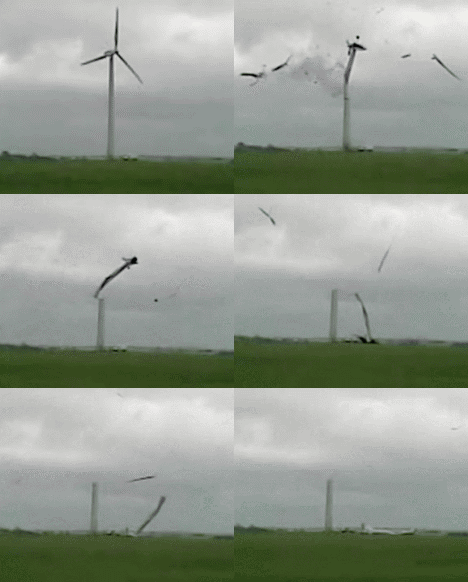
Via Treppenwitz. More of these funnies here. Also this one.

Via Treppenwitz. More of these funnies here. Also this one.
Comments Off on Educational television
Posted in Blogosphere, Israel, Library, Scribbles, Space
Tagged educational television, Star Trek
Used to be (and probably still is) that any appearance at the LBJ Library by PBS poohbah Bill Moyers drew an SRO crowd. Mainly aging, LBJ liberals yearning for the Great Society. They apparently never knew this side of the old Baptist hypocrite:
"His part in Lyndon Johnson and J. Edgar Hoover’s bugging of Martin Luther King’s private life, the leaks to the press and diplomatic corps, the surveillance of civil rights groups at the 1964 Democratic Convention…"
That’s from CBS newsman Morley Safer’s memoir Flashbacks. Liberal fascists do make strange bedfellows.
Comments Off on Dr. King’s wiretapper
Posted in Blogosphere, Library, Texana
Tagged Bill Moyers, Dr, Jr., Martin Luther King, Morley Safer
So, according to Henrik Svensmark:
No sunspots = more clouds = lower temperatures.
The Central Texas winter, which began quite early last year, should be more or less over by March 1. Let’s just hope.
Comments Off on The sun is still quiet
Posted in Blogosphere, Library, Rancho Roly Poly, Science/Engineering, Space, Weather/Climate
Tagged Henrik Svensmark, sunspots, winter 2008-09
This lady is one great writer and story teller. Such a pity she died so young. Nevertheless I am still happily plowing through her thirteen eleven twelve (confusing bibliography) published novels. I started here, and recently finished this post-apocalyptic one and this fantasy one.
Last night I finished her short story collection, Blood Child, and came away with five favorites out of nine there, including the title tale about species symbiosis and a sympathetic, loving tale of incest. Her deceptively simple prose is enticing, even when the stories are strange. Her genre is science fiction and fantasy, after all. More of the latter than the former, it seems, though that may just be where I am in the trek. Harrowing as some of her tales are, they usually end satisfactorily, even hopefully. Like classic science fiction often does. Give her a try, if you haven’t already. You won’t be sorry.
This novel by Vernor Vinge is one of the most imaginative I’ve read. It easily compares with the works of the old masters of scifi. Ostensibly a murder mystery, it’s also about the last two hundred or so human beings left on earth, thousands of years in the future–to the extent that they stay on earth when not "bobbling" forward through time. Their travels caused them to miss what they call the Great Extincton of humanity and they don’t know what caused it. Now they must figure out how to start over again, if only at a nineteenth century level.














 THE TEXAS SCRIBBLER