
Dome of the telescope at McDonald Observatory in West Texas that helped map the near side of tidally-locked Luna before the landings began in 1969.

Dome of the telescope at McDonald Observatory in West Texas that helped map the near side of tidally-locked Luna before the landings began in 1969.
Comments Off on Harlan Smith 107-inch reflector
Posted in Science/Engineering, Space, Texana
Tagged 107-inch reflector, Harlan J. Smith, Luna, mapping the moon, McDonald Observatory, University of Texas
Powerful book, this, despite the irony that fifty years after it was first published, nothing remotely close to its apocalyptic vision of nuclear holocaust has yet occurred or even seems likely. Not even with the Iranian push for nukes.
There is another irony about this classic SciFi tale (which is only really SciFi at the end and then space opera not hard science) and that’s the lengthy and inspired Catholic discussion about how even people dying in pain should not offend G-d by taking their own lives. Then, Googling, I discover that the author, Walter Miller Jr., killed himself.
Nevertheless, his book is a wonderful read, thoughtful and challenging, from beginning to end. With plenty left to chew over (see his chin-choppers poem below) long after the last few paragraphs are done with. I love the fact that it takes place in Texas, with Texarkana, Pecos and Laredo in starring roles. Think I can see why he did not write a second one until forty years later and it never equaled the first. The lit crits must have smothered him with love. Then, being a World War II combat vet, he had PTSD guilt to deal with, also. R.I.P.
Comments Off on A Canticle for Leibowitz
Posted in Library, Obituaries, Science/Engineering, Scribbles, Space
Tagged A Canticle for Leibowitz, nuclear holocaust, suicide, Walter Miller Jr.
I enjoyed the hard-science aspects of this book, despite its unusual number of typos (proof that even mainstream publishing needs line editing) and Sawyer’s penchant for callous heroes. I was lucky in that I’d never heard of the TV series (until I read some of the other reviews at Amazon) and so was not distracted by comparing the book to it.
By callous heroes, I mean the Japanese engineer’s decision to leave her dead child in the street (to the care of strangers) so she can get back to work. It was of a piece with the hero of Calculating God who decides that his spiritual enrichment justifies leaving his children to grow up without him. It’s really just Sawyer’s hell-bent determination to move his plot at whatever cost.
But the physics-philosophy of this tale—Is the future immutable? Is free will an illusion?—is worth the effort to overlook the flaws. Even the Canadian author’s usual digs at American gun ownership and lack of socialized medicine. When authors like Sawyer reach a certain peak of fame, not only does the editing of their books decline, but they feel free to push their politics. Pity that.
Comments Off on Flashforward
Posted in Library, Science/Engineering, Space
Tagged Calculating God, Flashforward, hard science fiction, partcle physics, Robert J. Sawyer, time travel
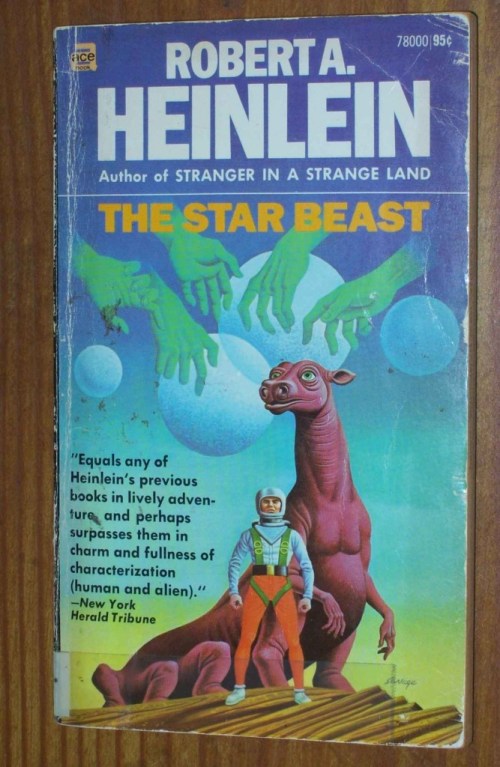
This is one of Heinlein’s older juveniles. Note the ninety-five cent price. It’s from this site that mocks some book covers, this one for the astronaut’s day-glo orange trousers. Hmm. Mr. B. and I enjoyed the tale as a bedtime story a few years ago, despite the tedious courtroom passages which weren’t near as funny as the author tried to make them.
Comments Off on Flawed book covers
Posted in Library, Mr. Boy, Scribbles, Space
Tagged bad book covers, Robert A. Heinlein, science fiction, space opera, The Star Beast

Stunning new pix and video of Sol from the Solar Dynamics Observatory.
Comments Off on Closeups of Sol
Posted in Science/Engineering, Space, Weather/Climate
Tagged Sol, Solar Dynamics Observatory, the sun
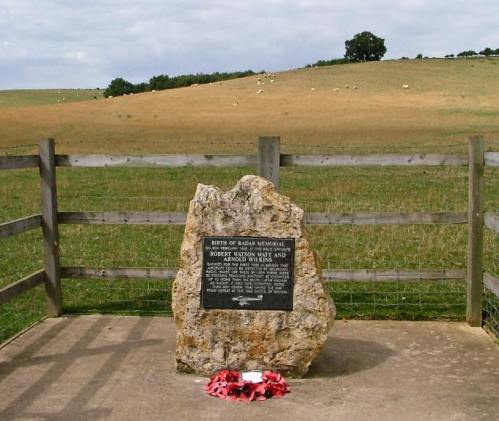
All countries have their cultural blinders, and none is so blind as he who will not see. This one, which is set in stone, as it were, claims to mark the approximate English site of the “birth of radar,” discounting much earlier work in Germany, the USA and elsewhere. All it needed was a bit less hubris in the wording. Englishman Robert Watson Watt certainly was a significant radar pioneer, especially in microwave radar. But he wasn’t even the midwife, let alone the matriarch, of the whole technology.
Comments Off on The Brit’s phony radar memorial
Posted in Library, Science/Engineering, Space
Tagged microwave radar, radar, Robert Watson Watt
Octavia Butler could write, no doubt about it, and it’s a shame she died so young. Who knows what else she might have done? I’ve read a half dozen of her books and this is one of the few that qualify as science fiction. Yet it also matches the sensualist preoccupation of many of the others. Although this time it’s hard to imagine a sexual liaison with creatures that look and feel like shuffling collections of earthworms.
I gave this a one-star review at Amazon not for quality but because the idea of a planet-devastating nuclear exchange between the US and Russia after the collapse of the Soviet Union (the hook that lets the aliens take over) was trite, as well as unbelievable. And, then, the story was so strange, compelling at times but, in the end, just too creepy for me to want to go on to the next in the series.














 THE TEXAS SCRIBBLER