Category Archives: Texana

More bluebonnets

Bluebonnets+008

Still haven’t had a chance to get out and photograph the bluebonnets. And won’t for a while, now that Mrs. C. has me double-checking her tally of our taxes. We are not among these folks who, don’t you know, probably vote for the Dems who keep raising the taxes of the rest of us. See what the Tea Party is upset about? This shot of the blue carpets is from a friend who lives out near Washington-on-the-Brazos. Illustrates what a great crop there is this year.

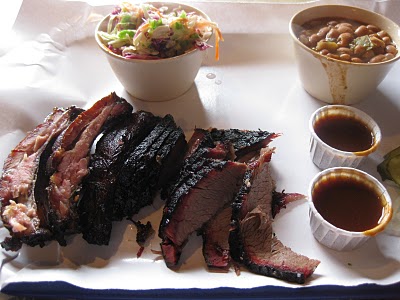
Ruby’s BBQ

Ruby's 02

Umm. Makes my mouth water just looking at it. Gotta go get some soonest.

Via Full Custom Gospel BBQ.

Black patriots in Congress

True leaders. Long before the current indolent crop of race-baiters and thieves.

The End of the Straight and Narrow

This absorbing collection of nine short stories has two common themes: Texas as a homeland and Christianity as a balm and a barb. Some of the characters in the first four stories grew up with Jesus and never leave Him, however they may struggle at times with the organized church.

The narrator son in the Houston family of the second part’s five stories (which comprise a novella) encounters Jesus late, after his blind and depressed mother has driven his scientist father into the bed of her longtime caretaker. In his remorse, as his marriage is collapsing, the father seeks counseling and becomes Born Again.

Thus he becomes what many devout believers are in America today, and particularly the evangelical Christians of the stories in the book’s first part: outsiders in a secular society which either mocks the expression of their values, attacks them as subversive, or ignores them altogether. Author David McGlynn comes at it all as a skilled reporter, neither endorsing nor condemning, but finely detailing the challenges and the rewards of a way of life that increasingly is being lost to us.

Cowpunchers on strike?

“On this day in 1883, many Texas cowboys went on strike against their
bosses, absentee ranchers. The cowboys’ grievances, however, were
against developments that proved permanent. As closed-range ranching
wiped out the previous open-range industry, some of the cowboys’ traditional perks were denied them. No longer could they brand mavericks, keep small herds of their own, or receive part of their pay in calves. The strike mustered some 300 cowboys at its peak strength, but after 2 1/2 months the work stoppage was so weakened that the May roundup occurred without incident. The last press mention of the strike was in the Dodge City Times for May 10, 1883.”

Nandina in the snow

NandinaInTheSnow

This was taken a few weeks ago. But I figured if I didn’t run it soon, it’d really look silly when the daytime temps are in the 80s everyday, instead of just occasionally as they are now. This snowfall was a rare event for us.

Adelsverein: The Gathering

This is a dandy historical novel of the 1840s German settlement of the Texas Hill Country which I recommend with caveats. I was familiar with the basic facts but learned a few things, such as the details of Baron Meuesbach’s peace treaty with the Comanches. It was unique in Texas and more or less held until the murderous tribe was exterminated by the U.S. Army. I also didn’t know how inept the pre-Meusebach Verein leaders were or that they employed their own uniformed soldiers to protect the settler families.

As a two-time indie author, I finally realized that it had been a long time since I had read someone else’s indie book. I figured Hayes (the blogosphere and Milblogging’s “Sgt. Mom”) and her Adelsverein trilogy was the best place to start. It was a good decision. This first book paints an epic in satisfying old-fashioned style that effectively lures the reader on.

Unfortunately, Hayes leaves almost nothing to a reader’s imagination. That can grate on folks raised on movies and television. Unlike readers of the 19th century, we don’t need exhaustive description of major and minor actors. I also could have done without all the adverbs. Seemingly every speech is characterized, rather than trusting to the context to convey the meaning. Despite those annoyances, the main characters seem real and lovable and their tragedies and joys won my empathy and spurred my curiosity to find out what would happen to them next.

The typos and misspellings, by my count on 46 of the book’s 365 pages, do slow things down as you try to puzzle out the author’s intention. Surely, most of them could have been avoided, and a second edition to fix them is warranted. However, Hayes is sufficiently talented and her story so well crafted that I’ve bought the second installment, “The Sowing.” I want to find out how the Beckers and the Steinmetzs fare in the turbulent Civil War years. Tragedy ahead, I expect. I’ll be hoping to find that the proofreading has improved.