Tag Archives: 6th Armored Cavalry Regiment

The feds don’t trust their own palace guard

Little ruckus here over discovery that Marines marching in King Putz’s inaugural parade had their rifles disabled so they couldn’t be fired. Apparently, according to a commenter here, the move isn’t unique to Obutthead. Lots of other presidents have done it, too.

I do recall sitting in an armory in full kit at Nixon’s inaugural in 1969. Our rifles were not disabled but we weren’t marching. Our squadron of the 6th Armored Cavalry Regiment was detailed in case there was a riot. There’d been quite a few the previous year after the assassination of Dr. King. We’d been thoroughly trained in riot control and would only have used live ammo as a very last resort. A menacing display of fixed bayonets was first, tear gas was second. But we had copper-jacketed 7.62 mm. And, like the Marines in January, we also carried M-14s.

Nothing happened in 1969 and we all went back to the barracks at Fort Meade and turned in our weapons at the troop armory. The troopies wandered off to Fiddler’s Green to pig out on beer. I went to the O club for a round, then back to the BOQ and went to bed. It had been a long, boring day.

Via Instapundit.
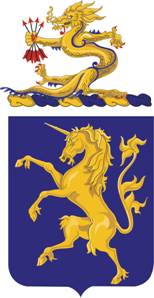
6th U.S. Cavalry

6CavRegtCOAWorking a future post on my knoxville1863 blog I was tickled to find out that Brig. Gen. William P. Sanders, for whom Knoxville’s Fort Sanders was named, was a veteran of the 6th U.S. Cavalry Regiment in the Virginia Peninsula Campaign and at Antietam/Sharpsburg.

I was a lieutenant-platoon commander in the 6th’s descendant unit, the 6th Armored Cavalry Regiment at Fort Meade, Maryland, in 1968-69.

We were then rumored to be headed to Vietnam to replace the 11th Armored Cavalry Regiment, though, in fact, most of our troops were combat veteran returnees at a time when a one-year combat tour was all that was required.

Instead, we spent most of our time training for riot control in those days of race riots, though we didn’t have to control any. Instead we guarded President Nixon’s inaugural ceremonies. The unicorn is the 6th’s shoulder patch and coat of arms.

The Year of the 6th Cav

6CavRegtDUI

My old Army bud Chuck Waldron and I like to recall our eight to nine months as platoon leaders in the Sixth Armored Cavalry Regt., 1968-69, before going to Vietnam as light-infantry advisors to SVN militia. Among other things we guarded Nixon’s inauguration, though me and my guys got to sit in the warm armory while he and his had to be outside in the cold.

I know he’ll be interested in this Civil War enthusiast’s plan to spend this year tracing the then-new regular Army regiment’s activities through their annual returns for 1862. I wonder when the unicorn shoulder patch was authorized? Before, or after, the regiment served here in Austin under Custer in 1865-68 as post-war federal occupiers?

Crossed Sabers

This new civil war blog tracking the history of US Cavalry caught my eye because it details a Scottish immigrant captain of the 6th US Cavalry in 1866, and an earlier skirmish of the 6th, a defeat, actually, at the hands of the 7th Virginia Cavalry in July, 1863. Despite my entirely Confederate ancestry, I’m interested in the 6th because I served as a platoon leader in the 6th Armored Cavalry Regiment in 1968-69. Unicorn! We were allegedly training to replace the 11th Armored Cavalry Regiment in Vietnam, but most of our troopers were returnees from the war waiting to get out of the army. Most of us platoon leaders went to the war as light-infantry advisors to the SVN. Today, the 6th serves not as a regiment, but as four separate squadrons assigned to three infantry divisions and an aviation brigade.