Category Archives: Texana

Winter to linger, flood chances increase

Rainfall has been above normal across Central Texas since Jan. 1, according to the National Weather Service. That’s expected to continue, with a consequent risk of significant flooding, especially on area rivers and lakes.

Forecast rain & storms today through Monday will only add to the problem.

Meanwhile, LCRA meteorologist Bob Rose says one of the coldest winters in the past hundred years isn’t quite ready to relinquish its grip. This month and next are expected to be cooler than normal: “Springtime temperatures aren’t here yet, and it looks like it will still be a while before we see a consistent stretch of warm…”

The Alamo falls

On this day in 1836, the chapel of San Antonio de Valero Mission,
under siege for thirteen days by the Mexican army under General Antonio
Lopez de Santa Anna, was subjected to an early morning assault. After
a fierce battle, lasting for perhaps some 90 minutes, the defenses
of the Alamo were overrun and all the defenders were killed. The slogan
“Remember the Alamo!” subsequently became a rallying cry for the Texas
Revolution, and the Alamo became a shrine to fallen Texas heroes.”

With contemporary similarities, albeit still disputed.

LBJ: stranger than fiction

Seems old Lyndon Baines broke some laws for other than personal gain and one fellow is out to see him declared righteous for it, at least in Israel. LBJ, we hardly knew ye. Nor did your granddaughter, but she’s on the right path.

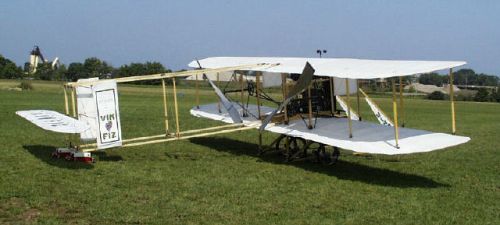
The Vin Fizz

VF rear diagonal ss

I always liked this story of the first airplane to fly cross-country. In 1911. It’s a Wright EX pusher. It landed on its eighty-four day trip somewhere north of Austin, drawing a big crowd, as it did everywhere. Vin Fiz was a soft drink that fared worse than flying did, obviously. Ever heard of it? Me neither. The picture is of a replica, whose owner will reenact the flight next year.

Sending a message to D.C.

portrait-webBorn a tenant farmer, graduated an Aggie, flew C-130s in the AF, and now headed for an unprecedented third consecutive term as governor (much to the disgust and dismay of liberals everywhere), Rick Perry rides again. Only the Obama-loving legacy media was surprised last night when Perry (friend of the Tea Partiers and Sarah Palin) beat Sen. Hutchinson and Ms. Medina. The Dems nominated a mayor of Houston. Good luck with that. The Dems haven’t won a statewide race since 1994. And Roger Simon likes Rick, too.

Happy Texas Independence Day

It’s happy now. Wasn’t on this day in 1836. The Alamo was under siege by the Mexican thousands and the Texians, despite today’s issuance of their proclamation of Texas independence, were about as disorganized and fractious as you might expect a fledgling government and its ad hoc military to be.

Four days from now, with the fall of the Alamo, and not long afterward with the horrific massacre at Goliad, the prospect of hanging would fix all their minds remarkably on their country-making goals. The victory at San Jacinto would follow and Texas would be a newly independent Republic.

The Invention That Changed The World

Birth control pills? The automobile? Antibiotics? Arguably. But in this case it’s radar, and Robert Buderi does a grand job of explaining why in the 500-plus pages of his sometimes technical, occasionally confusing, but always compelling 1996 classic, which I recently reread for the third time.

Perhaps it’s most compelling if you use your microwave (whose magnetron heart is a principal radar component) for more than defrosting bread or reheating coffee. Not to mention having more than a passing interest in astronomy, the battlewagon Texas (one of the first warships to, in 1939, get a working radar) and know some meteorologists who rely on their Dopplers for play-by-play forecasting of severe thunderstorms.

Must be other reasons, too, which would account for why the thirteen-year-old book still has respectable sales, even if only sixteen people have taken the time to review it at Amazon. Could be because this is one of the few accessible books to explore this world-changing technology and the people behind it. Which could be because much of it still is a military secret. The aluminum “chaff,” for instance, first used in 1945 to confuse enemy radar still is very much in use and hardly changed in sixty-five years.

Buderi, a former Business Week technology editor, does drop the ball now and then, and not just because of his understandable inability to penetrate all of the technology’s secrecy before, during and since World War II. Nazi Germany, as he points out, failed to match the radars of the Allies. But not because the Germans didn’t have the earliest lead of all. In 1904, in fact, long before any other country was taking RAdio Detection And Ranging seriously. (Unfortunately Germany’s military and commerce didn’t either).

Buderi dismisses Christian Huelsmeyer’s Telemobiloscope as merely preliminary. But the Duesseldorf engineer’s invention to prevent ships from colliding had all the ingredients except the cathode ray tube, which hadn’t been developed yet, and the radar name which awaiting coining. Nevertheless, Buderi’s book is a winner. There’s simply nothing else like it. But, good as it is, it suffers from its own focus on the Rad Lab at MIT, ignoring or slighting developments elsewhere. Still, it’s a murky subject and Buderi’s book is illuminating, if incomplete.