Category Archives: Civil War

The Wanderer: The Last American Slave Ship and the Conspiracy That Set Its Sails

The title of this fascinating work is a phony, as journalist/author Eric Calonius makes clear in his text. The truth seems to have been too much for his New York publisher to bear. That is the author’s sidebar unveiling of the little known late 1850s business offices of slave traders in New York City and their slave ships  down at the wharves of Lower Manhattan.

Calonius shows how these Yankee slave dealers gathered their capital from Northern businessmen and sent their ships to West Africa to buy African slaves low and then sell them high in Cuba and the Caribbean. Then they hosed down their Middle Passage decks and steamed home to New York.

All under the disinterested eyes of corrupt port officialdom (despite federal law making American slave-trading a crime punishable by death). The focus on the Wanderer and the thundering editorials by The New York Times against the few Southern hot-heads who took it to the mouth of the Congo River for slaves and then back to Georgia therefore seems disproportionate as well as hypocritical.

The author smartly weaves the Wanderer tale in with the 1850s politics of North and South and other events, such as the John Brown raid, that precipitated the Civil War. The tracing of the descendants of one Wanderer slave is a nice touch. Would have been better, though, to have included a few of the unwilling passengers of the more numerous New York slavers who continued to operate well into the war. You know, the war supposedly fought to free the slaves.
Knoxville 1863 review

My Israeli friend “Snoopy the Goon” (he prefers anonymity on the Web) has written a nice review of my Civil War historical battle novel and posted it on his blog with links to the Amazon sales page and the book’s new blog, “Knoxville 1863, the novel.”

Thanks, Snoop. Considering that you don’t normally like military history (and that you even had to Google Tennessee to see where Knoxville was), I admire your persistence and I’m very pleased that you enjoyed the story.

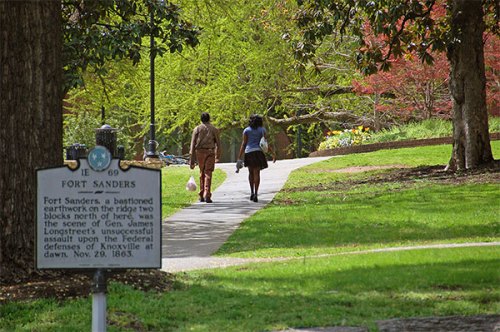
All that remains of Fort Sanders

ftsanderssm

Just a historical marker two blocks south of the military crest of the ridge. I posted this on the novel’s Web site as well. Will post it here also to give the novel site a little boost. It is not yet attracting as many hits as the 13th MS one, which is understandable I suppose. The MS brigade was famous and still is among the war’s buffs. Fort Sanders was, at best, obscure. Forgotten is even more accurate. That was my gamble novelizing it, but also my opportunity.

Where are the peaches?

HEB, it seems, is only carrying East Texas peaches at the moment. Mrs. Charm, back last night from her week in California, bought some this afternoon. Huh, I said, what happened to the Hill Country crop? None in evidence, said she. Must be just around the corner, though, as the growers out there are advertising away.

Meanwhile, surfing a little while ago I learnt that I have been misinformed forever in thinking that Stonewall Jackson loved and ate lemons. Ha! Turns out it was peaches he loved. Makes sense. Never could understand the alleged lemon preference. Except that it was, I suppose, meant to show how tough and eccentric he was. Lots of good peaches out in Stonewall, his namesake town!

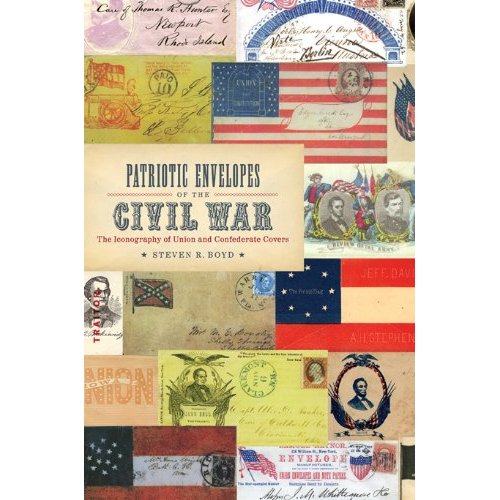
Civil War Envelopes

ACWPatrioticEnvelopesNot having inherited any Civil War letters, and not knowing anyone who did, I found this cover of a new book on them pretty fascinating. I had no idea. Believe I’ll post this on my Knoxville 1863 novel’s site, as well, since one of the narrators of the story talks about having received a letter from home but having no paper or envelope to write back.

The novel’s site is drawing fewer visits (so far) than the one I’ve begun for the 13th Mississippi Infantry Regiment. Probably because the 13th still is relatively well known among ACW buffs, certainly compared to the novel’s subject, the Battle of Fort Sanders, which has been pretty much forgotten. But that may change by next spring when the sesquicentennial of the war begins and local interest catches fire as media mentions proliferate.

Above The Fray

I enjoyed much of  the first half of this supposed historical fiction novel—until I ran into the author’s ahistorical put-down of the fighting ability and simple humanity of the Confederate soldier.

In the beginning, the novel gratifyingly defies the silly modern stereotypes of the evil South and the virtuous, slavery-destroying North. But author Kris Jackson apparently was concerned lest he go too far with the even-handed approach, and turned preachy. Or maybe he really believes the propaganda.

Building a tale around the history of the little-known Union Balloon Corps was a brilliant idea. Too bad the execution is so predictably PC. It isn’t above the fray at all. It’s beside the point.

PC and the Civil War

What happened in one small, Virginia town when the 1910 Confederate memorial was struck and all-but-destroyed by an out-of-control truck driver: You can imagine the political conflict, I’m sure, when it came to discussing how to rebuild. The truth is that the memorial (and others like it across the South) got erected in the first place by the then-PC-dominating majority. And the twist here is that, so far, slavery and emancipation are not on the agenda for mention.