Category Archives: Library

Knoxville 1863

I’m happy to announce the first edition of my new historical novel, Knoxville 1863, is now available in e-book format at Smashwords here. Multiple e-book formats, in fact, from Kindle to Stanza (iPod and iPod Touch) to Palm and Sony. Also available in paperback here.

The novel is  equal parts history and fiction about a Civil War battle that’s largely been passed over by historians despite its involving some of the most famous commanders and units of the Union and the Confederacy. Indeed, President Lincoln considered a Union victory at Knoxville a key to winning the Civil War.

Since reviews are so hard to come by, I’m offering a free copy of the e-book in any format you like to any rare reader who will agree to write a review at Smashbooks, whatever you think of the novel. I’m easy. After years in the news biz  I have a pretty thick skin. So leave a comment if you’re interested and I’ll use your private email address to tell you how to get your free copy.
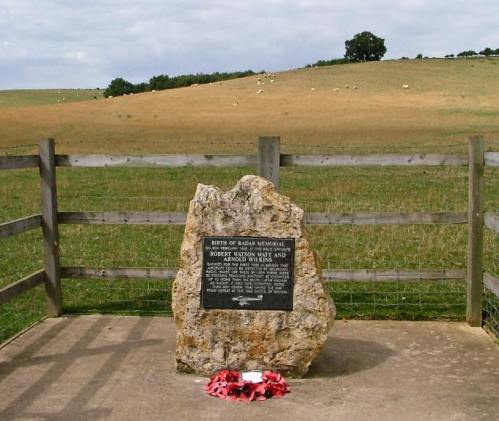
The Brit’s phony radar memorial

radarmemorial

All countries have their cultural blinders, and none is so blind as he who will not see. This one, which is set in stone, as it were, claims to mark the approximate English site of the “birth of radar,” discounting much earlier work in Germany, the USA and elsewhere. All it needed was a bit less hubris in the wording. Englishman Robert Watson Watt certainly was a significant radar pioneer, especially in microwave radar. But he wasn’t even the midwife, let alone the matriarch, of the whole technology.

Dawn

Octavia Butler could write, no doubt about it, and it’s a shame she died so young. Who knows what else she might have done? I’ve read a half dozen of her books and this is one of the few that qualify as science fiction. Yet it also matches the sensualist preoccupation of many of the others. Although this time it’s hard to imagine a sexual liaison with creatures that look and feel like shuffling collections of earthworms.

I gave this a one-star review at Amazon not for quality but because the idea of a planet-devastating nuclear exchange between the US and Russia after the collapse of the Soviet Union (the hook that lets the aliens take over) was trite, as well as unbelievable. And, then, the story was so strange, compelling at times but, in the end, just too creepy for me to want to go on to the next in the series.

Smashwords

My indie short-story collection, Leaving the Alamo, Texas Stories After Vietnam, is now on Smashwords in multiple ebook formats, such as Stanza and Sony, at $2.95. Meanwhile, I’m shifting the paperback version from POD distributor Lulu to CreateSpace where it is suffering birthing pains at the moment. The print shift should mean more sales and a little bit more revenue, assuming my new marketing/advertising campaign keeps producing the orders that have been trickling in to the Lulu version for the past few weeks.

Adelsverein: The Sowing

This wonderful second novel of a trilogy about the German settlements in the Texas Hill Country concerns the tragic Civil War years, when an apparent majority turned its back on the old efforts to bring the proud but always-threatened and always-broke Republic of Texas into the Union. Texas was much smaller then but still had fewer slaves than most slave states, and author Celia Hayes contends that it was mainly the John Brown raid on Harper’s Ferry and subsequent rumors of possible slave insurrections that drove Texas into the Confederacy.

With the departure of so many of the state’s finest (including many Germans) to the battlefields of Tennessee and Virginia, the scoundrels took over the home front. Particularly in the hills where so many settlers more often spoke German than English and so were considered foreigners of dubious loyalty. Indeed many of them were Unionists, as a monument to some murdered ones, erected in Comfort in 1866, still attests. Tragedy likewise comes to Hayes’ main characters, the fictitious Becker and Steinmetz families, and we suffer along with them in the fulsome emotion her story has created in us.

This is old-fashioned story-telling at its best, and I was pleased to see many fewer typos and misspellings than in the first book. And I have bought the third one, the Harvest, and look forward to it. The old German towns of the hills, especially Fredericksburg, the principal place of the tale, are now major tourist attractions, something the old German burghers would have been pleased to know. It’s enriching to now have an emotional attachment to such as the old coffee-mill-style Verein’s Kirche (which still stands amidst the daily bustle on Main Street) thanks to Mrs. Hayes good writings.

Why the MFA is no longer a sure thing

“Do they, like, hand out a memo on your first day of your MFA program telling you that writing about alcoholic working-class men who cannot communicate with their sons/fathers/wives is the only way to convey Authenticity? Well, take it from the assistant: we never want to see another god*** book about an alcoholic working-class man who cannot communicate with his son/father/wife ever, ever again, particularly if that story is written by a 22-year-old white kid from Westchester County.” 

Oh, happy day, the MFAers have to do some real work for a change. Heh.

Operation eBook Drop

OEDLogoWorking to format my Indie books Leaving The Alamo and Knoxville 1863 for this program to provide free ebooks to active military, particularly those in Afghan and Iraq. It’s even “adopted” a light aircraft carrier, the Bonhomme Richard. Formatting (or, rather, deleting the old formatting) is a pain, so it’s moving slowly.